



Last updated: 20 August 2026
You get more volume in your hair by holding the hair up at the roots while it dries, letting it cool down before you release it, and leaving out anything that weighs your hair down. Washing, drying, your products and your haircut each contribute a part. One loose tip won't do the job.
In short
- Dry your roots first, with your head tipped forward or by holding sections up with your fingers. Hair that hangs down while it dries, dries downwards too.
- Switch to the cool setting last and let your hair cool down in the lifted position before you release it. This is the step most people skip and the one that delivers the most.
- Only apply conditioner from ear height down and in the ends. On your roots it acts as a weight.
- Mousse at the roots plus a little volume powder on your parting is enough for most hair types.
- Volume is always temporary: count on one day to a few days, and on day two you only touch up your roots.
Contents
- Why your hair keeps falling flat
- Method 1: change the way you wash
- Method 2: dry your hair with the roots up
- Method 3: use two products, not five
- Method 4: move your parting and look at your habits
- Method 5: get your hair cut with volume as the goal
- Method 6: touch up your roots on day two
- Fine hair and thinning hair are not the same thing
- How long does extra volume last in your hair?
- Frequently asked questions
Why your hair keeps falling flat
Volume in your hair is the space between your hairs, and it appears when the hair stands up at the roots instead of lying flat against your scalp. Three things push it back down: weight (sebum, the oil your scalp produces itself, plus leftover conditioner and too much product), direction (hair that falls the same way all day keeps falling that way) and structure, because fine hair naturally has less firmness to stay upright.
What you can do about it comes down to one principle. The shape you put into your hair while it dries and cools is held in place by bonds between the proteins in your hair. These are weak bonds that come loose again as soon as water gets in, as NEMO Kennislink explains. That is why cooling down before you release your hair works, and why your volume collapses in the rain or after you have been sweating. Volume is always temporary, and that is not a flaw in your technique.
Method 1: change the way you wash
More volume in your hair starts with less weight on your roots, and that is largely a washing habit.
- Don't wash your hair every day. Your scalp produces sebum to keep your hair supple, and washing daily can actually drive up that sebum production, making your hair greasy and therefore flat faster.
- Only apply conditioner from ear height down and in the ends. On your roots it acts as a weight.
- Rinse thoroughly, including the back of your head. Leftover product is an underrated reason why hair feels limp.
- Choose a volume shampoo if your hair falls flat quickly. It cleanses without a conditioning film, so your hair falls looser. It won't make your hair thicker: which shampoo suits your hair depends on your hair type and your scalp.
- Start with towel-dried hair instead of soaking wet hair. There is a difference between starting wet and starting towel-dried in how much grip you have and how long you spend drying.
Method 2: dry your hair with the roots up
Your drying technique determines more about your volume than the device you dry with. The order matters more than the speed.
- Apply heat protection to damp hair and distribute it with your fingers or a wide-tooth comb.
- Dry your roots first, with your head tipped forward or by holding sections up with your fingers. As long as your hair hangs down while it dries, it dries downwards too.
- Point the airflow from your roots to your ends. That keeps the outer layer of your hair smooth, so your volume looks full instead of frizzy.
- Keep drying until your hair is properly dry. Half-dry hair sinks back down as it finishes drying.
- Switch to the cool setting last and let your hair cool down in the lifted position before you release it. This is the step most people skip and the one that delivers the most.
- After that, run your hands through it as little as possible. Every time you go through your hair, you carry sebum to your roots.
If you work with a round brush, lift the brush at the root on every section before turning towards the ends. That technique is laid out in our guide to creating a blowout at home without going to the hairdresser. If you only want to work on the roots and not your whole head of hair, you can follow the steps in building volume at the roots with an airstyler. With short hair you work in smaller sections and a shorter drying time, and there are separate tips for styling short hair.
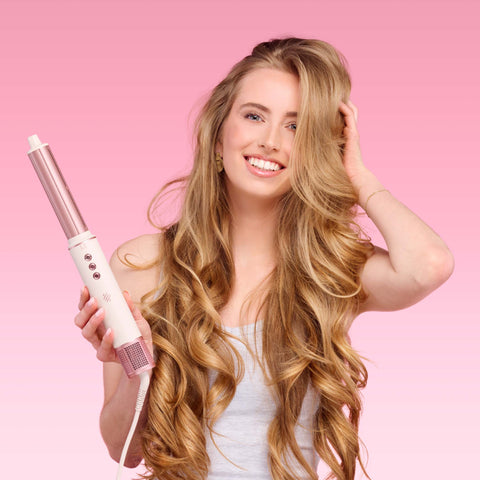
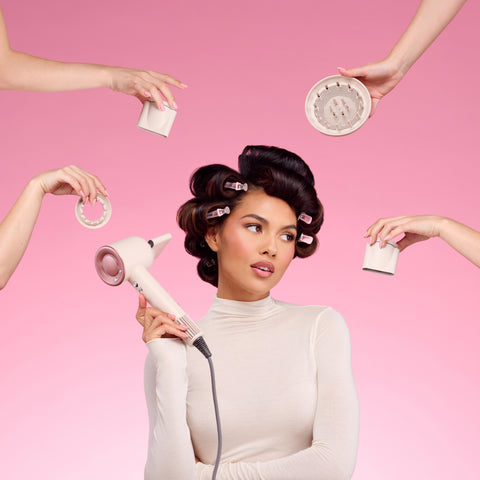
For volume, a hair dryer, a blow-dry brush and an airstyler essentially do the same job, as long as you hold the roots up and let them cool. Our Airstyler Pro Ceramiq brings those functions together in one device and works with three air temperatures of 35, 70 and 110 degrees, so you can lift the roots on a low setting. If you're going to buy a styling tool, also check whether it has a cool setting: that is the setting you use to lock in your volume.
Method 3: use two products, not five
Styling products give your hair grip and hold, but the wrong product in the wrong place actually makes your hair flatter. Where and when you apply something counts for more than which product you choose.
| Product | What it does | Where and when |
|---|---|---|
| Mousse | Gives hold and lift while drying. | On damp hair, especially at the roots. |
| Volume powder (also called hair powder) | Gives grip and absorbs sebum, lifting your roots up. | On dry hair, on your parting and along your hairline. |
| Dry shampoo | Absorbs sebum and refreshes your roots between two washes. | On dry hair at the roots, not every day. |
| Sea salt spray or texture spray | Gives rough texture and grip in the lengths, no lift at the root. | On damp or dry hair, in the lengths. |
| Hairspray | Sets what you have built up. | Last, lightly and from underneath. |
| Oil or serum | Cares for dry ends and weighs down everything it lands on. | Only in the ends, never at the roots. |
Volume powder and dry shampoo work on the same principle: they contain powders that absorb oil, so your hairs stick together less. That is why you can't stack them for days in a row, because without washing in between the powder builds up. Mousse at the roots plus a little powder on your parting is enough for most hair types.
Method 4: move your parting and look at your habits
Part of your volume is lost to habits that have nothing to do with styling.
- Move your parting to the other side or to the middle. Your hair roots then have to stand up to cross over, and that gives instantly visible lift.
- Leave your hair alone during the day, because running your hands through your hair moves sebum to your roots.
- Backcombing at the roots is fine, with a fine-tooth comb and a light hand. Don't do it daily and not always in the same spot, because repeated backcombing damages your hair.
- Sleep with your hair in a loose bun on top of your head, or on a smooth pillowcase. Your roots then get flattened less.
- Take the weather into account. Humid air and sweat loosen the bonds in your hair, so the shape you dried into it sinks back down.
Method 5: get your hair cut with volume as the goal
Your haircut determines how much volume you can achieve with styling, so tell your hairdresser that volume is your goal.
Layers bring movement to mid-length and long hair and make your hair look fuller, but too many layers work against you: your ends become thin and your hair trails off at the bottom. Ends that are trimmed regularly keep your hair firmer at the bottom. With fine hair, the cutting line often makes more difference than any styling product you use.
Method 6: touch up your roots on day two
Rebuilding volume takes less work than washing and drying all over again. On day two you only touch up what has sunk down.
Divide your hair at your parting, apply a little volume powder or dry shampoo to your scalp and rub it in with your fingertips. Then go over your roots briefly with warm air, lifting the hair up as you go, and let it cool down cold. A few minutes is enough for the difference between flat and upright hair. If your hair feels heavy, there is nothing left to lift and washing works better after all.
Fine hair and thinning hair are not the same thing
Fine hair means that each hair has a thin hair shaft, so each individual hair is thin. You can have a great many fine hairs. Thin hair means there are fewer hairs on your head. Fine hair is a styling question, thinning hair is not, and that difference determines whether tips like these are going to help you.
If you have fine hair, everything above works, only your hair gets saturated faster. Use lighter products and less of them, dry in smaller sections and take your time cooling down. What fine and thin hair need beyond that is covered in our guide to styling fine and thin hair.
If your hair is genuinely getting thinner, styling is not the answer to the cause. According to Thuisarts.nl, everyone loses around 100 to 120 hairs a day, and that is normal. If you lose more than 120 hairs a day over a longer period, your hair is genuinely thinning. That can be caused by stress, giving birth, illness, too little iron or a thyroid condition. Diets, vitamin pills, creams and shampoos don't help against that, which is why we don't recommend them as a volume solution either. If you're worried, call your doctor.
How long does extra volume last in your hair?
Count on one day to a few days, and know that your hair structure and your sebum rhythm set the ceiling, not your technique. Fine hair that gets greasy quickly sinks down sooner than thick hair that stays fresh longer. We don't promise a week of volume, because for most hair types that is not realistic. What you do have in your hands: cooling down properly before you release your hair, keeping your hands off it during the day, and touching up on day two instead of starting over.
Frequently asked questions
How do you get more volume on top of your head?
Work only at the roots there. Apply a little volume powder to your parting, lift the hair up at the roots with warm air and let it cool down in that position. Moving your parting to the other side gives the fastest result on top of your head.
What is the best volume booster?
There is no single best one, because it depends on the moment. On damp hair, mousse gives the most hold while drying; on dry hair, volume powder works fastest because it gives grip and absorbs oil. A product without the drying technique delivers very little.
How do you give limp hair more volume?
First take weight off: wash less often, keep conditioner away from your roots and rinse well. Then dry your roots upwards and let your hair cool down cold before you release it. Limp hair needs light products, in small amounts.
How do you get more volume in thin hair?
With thin hair it is all about making it look fuller: layers that give movement, ends that stay firm and powder on your parting. If you lose more than 120 hairs a day over a longer period, you are dealing with thinning hair and a conversation with your doctor is wiser than a new product.
How do you get volume in straight hair?
Straight hair has no curl pushing it up, so everything comes from the roots and the texture. Dry your roots upwards, use powder on your parting and apply sea salt spray in the lengths for grip. A light bend with a round brush keeps your hair firmer at the ends.
Why does my volume fall out again within a few hours?
Usually because your hair had not cooled down before you released it, or because it was not yet completely dry. Sebum and humid air also push your hair back down, because the shape in your hair is released as soon as water gets in. Touching up at the roots then works better than styling all over again.
The Airstyler Pro Ceramiq combines the functions of a hair dryer, a blow-dry brush and an airstyler in one device, with three air temperatures of 35, 70 and 110 degrees and a cool setting that locks in the volume you have built up.
2-year warranty
30-day money-back guarantee
Trustpilot 4.7/5
Free shipping NL/BE/DE
View the Airstyler Pro Ceramiq


