



Last updated: August 10, 2026 · 5 min read
An airstyler with a brushless (BLDC) motor is mechanically quieter than an older device with a brushed motor, simply because there are no physical carbon brushes rubbing against each other. There's no independently measured decibel value for the Ace & Taylor tools that we can cite here, but the principle behind 'quieter thanks to BLDC' is a verifiable technical fact, not marketing talk.
In short
- BLDC (brushless) motors are mechanically quieter than traditional brushed motors, that's an independent technical fact.
- The Airstyler Pro Ceramiq, the Föhn PrecisionAir, and the AirStraight all use a BLDC motor.
- There's no official, independently measured decibel figure available, so be cautious of exact dB claims from any brand.
- The sound of a heat styler doesn't come from the motor alone, it also comes from the airflow itself.
- A lower heat or speed setting generally produces less noise than the highest setting.
Below, you'll learn exactly where an airstyler's noise comes from, and why you should be cautious of exact decibel claims.
Why is a BLDC motor quieter than a regular motor?
Traditional hair dryers and airstylers often use an AC motor or a DC motor with carbon brushes, physical contact points that rub against a rotating part to transfer electricity. That friction causes both noise and wear.
A BLDC motor (brushless DC) instead uses electronic control with magnets and sensors, with no physical contact rubbing together. As a result, a BLDC motor is generally quieter and lasts longer, this is a widely recognized technical principle in electrical engineering, not just a claim made by hair tool brands.
Why is there no reliable decibel figure for comparison?
Many brands in the beauty industry cite decibel values in their marketing, but those figures are rarely measured independently under standardized conditions, and measurement methods vary by manufacturer. As a result, dB claims between brands often can't be compared fairly.
Ace & Taylor doesn't publish a standalone decibel figure for the Airstyler Pro Ceramiq, the Föhn PrecisionAir, or the AirStraight. Rather than citing a made-up or unsubstantiated number, it's more honest to say: the motor type used (BLDC) is demonstrably quieter than an older brushed motor type, without claiming an exact figure we can't verify.
What else affects the noise, besides the motor?
A large part of the noise during blow-drying and styling doesn't come from the motor itself, but from the airflow being pushed out through the nozzles and the device. The higher the air speed, the more noise, regardless of motor type.
That's why a lower heat or speed setting usually also means less noise than the highest setting. If you're sensitive to noise, for example early in the morning in a shared household, a lower setting with a bit more time can be a more pleasant alternative to always styling on the highest setting.
Frequently asked questions
Is a BLDC motor always quieter than a regular motor?
Generally, yes, because there are no physical carbon brushes rubbing together. The exact noise experience also depends on airflow, nozzle shape, and the setting you choose, so it's not a guarantee of a specific decibel level.
Does Ace & Taylor publish an official decibel figure for the airstyler?
No, there's no independently measured dB value available. We'd rather point to the underlying, verifiable technical principle (BLDC is quieter than a brushed motor) than claim a standalone number.
Does a higher heat setting make more noise?
The heat setting itself has less impact on noise than the speed setting, but a higher air speed (often linked to higher settings) does result in more audible airflow.
Can I style early in the morning without waking anyone up?
A lower speed setting with a bit more styling time is generally quieter than the highest setting. No heat styling device is ever completely silent, due to the nature of the airflow.
Built with the same quiet BLDC motor as the rest of the lineup.
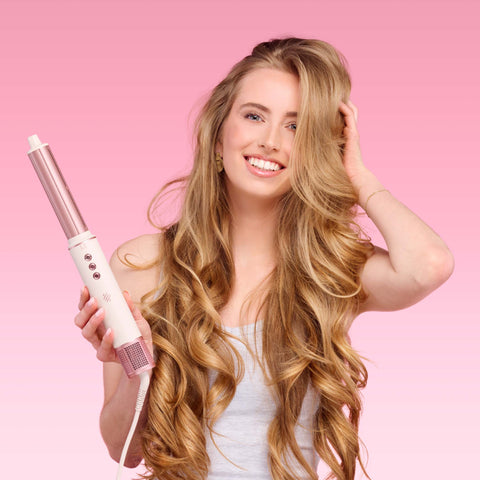
The Airstyler Pro Ceramiq uses a BLDC motor with no wearing carbon brushes, which contributes to both quieter operation and a longer lifespan.
2-year warranty
30 days to try at home
Works on all hair types 1A-4C
Trustpilot 4.7/5
Shop the Airstyler Pro Ceramiq
A&T
Written by the Ace & Taylor Team. We deliberately don't cite a standalone decibel figure because we can't back up an independently measured value.


