





Last updated: August 10, 2026 · 5 min read
On real hair extensions (made from human hair), you can use an airstyler on a low heat setting just as you would on your own hair. Synthetic extensions or wigs are a different story: regular synthetic fibers can melt or get damaged by heat, unless the packaging explicitly states it's heat-resistant synthetic hair, and even then, a lower temperature and extra care apply.
In short
- Real hair extensions (human hair) can be styled with an airstyler on a low heat setting, just like your own hair.
- Regular synthetic extensions or wigs can melt or get damaged by heat, unless they're heat-resistant.
- Always check the label or packaging of extensions or a wig for heat resistance before using a heat tool.
- If in doubt, test a small, inconspicuous section first on the lowest heat setting.
- With clip-in or tape-in extensions: avoid heat too close to the attachment points to prevent damage.
Below, you'll find out how to tell the difference between material that can handle heat and material that can't.
What's the difference between real hair and synthetic material when it comes to heat?
Extensions and wigs made from real (human) hair respond to heat the same way your own hair does: they can be curled, straightened, and are susceptible to the same kind of heat damage as your natural hair. A low heat setting and a heat protector are a good idea here too.
Synthetic fibers are made from plastic, and regular plastic fibers can melt, frizz, or get damaged beyond repair when exposed to heat. Some wigs and extensions are made from heat-resistant synthetic fibers, though, which can handle styling tools up to a certain temperature (often lower than what you'd use on real hair). This is stated explicitly on the packaging or label, never assume it without checking first.
How do you safely style extensions or a wig?
First, check the material: if there's no mention of heat resistance and you're not sure whether it's real hair, assume heat isn't safe and skip the airstyler, hair dryer, or straightener. With real hair or confirmed heat-resistant synthetic hair, start with the lowest heat setting and test a small, inconspicuous section first.
With clip-in or tape-in extensions, it's smart to avoid styling too close to the attachment points (the clips or tape strips), so heat doesn't damage them or cause them to come loose.
Frequently asked questions
Can I use an airstyler on my clip-in extensions?
If the extensions are made from real hair, yes, on a low heat setting, but avoid getting too close to the clips themselves to prevent damage.
What happens if I use heat on regular synthetic extensions?
Regular (non-heat-resistant) synthetic fibers can melt or frizz beyond repair when exposed to heat from an airstyler, hair dryer, or straightener.
How do I know if my wig is heat-resistant?
That's stated on the wig's label or packaging. Without that information, you can't assume the material can handle heat.
Can I use an airstyler on a wig made from real hair?
Yes, a wig made from real (human) hair responds to heat like your own hair, so a low heat setting with a heat protector is a smart approach here too.
Multiple heat settings, made for careful use too.
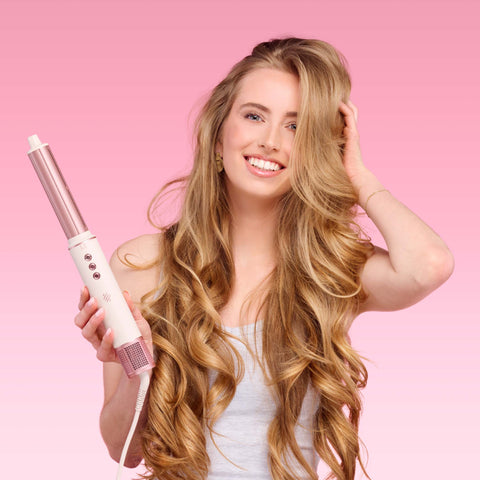
The Airstyler Pro Ceramiq's lowest setting (35°C) is a good starting point for real hair extensions, if you want to style them with the same tool as your own hair.
Works on all hair types 1A-4C
2-year warranty
30-day home trial
Trustpilot 4.7/5
Shop the Airstyler Pro Ceramiq
A&T
Written by the Ace & Taylor Team, based on questions from customers who want to style their extensions or wig too.


