

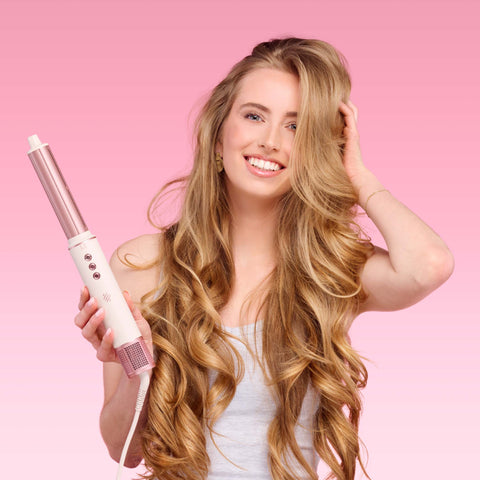
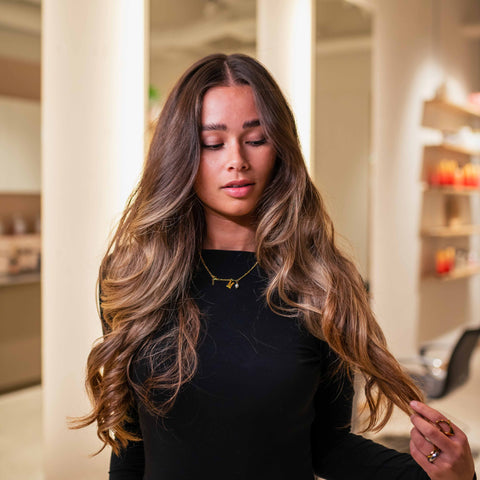
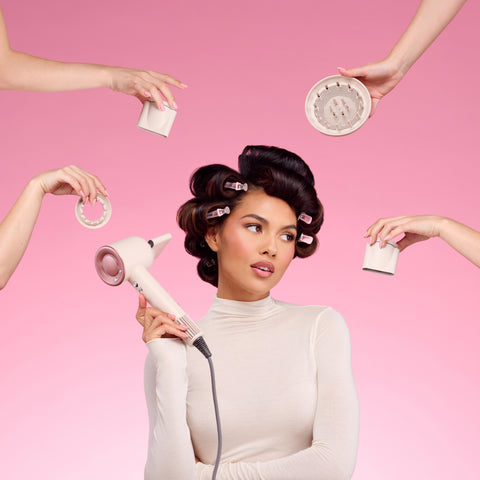

You've just curled your hair, it looks great in the morning, and a few hours later much of the curl has already dropped out. Curls dropping out fast happens to far more people than you'd think, and it's not down to clumsiness. There are a few concrete causes behind it, and some of them you can influence yourself. In this article you'll read why a curl drops out, what you can do to make it last longer, and why the outcome differs by hair type.
Table of contents
- Why do curls actually drop out?
- 5 reasons your curls don't hold
- What can you do yourself to make your curls last longer?
- Does this also work if your hair naturally doesn't hold a curl long?
- What else you can do after curling
- Frequently asked questions
Why do curls actually drop out?
A curl created with a styling tool is a temporary shape in your hair. Heat makes the hair structure pliable for a moment, and once the hair cools it holds that new shape for a while. That hold isn't permanent: heat, moisture, and simply the passing of time gradually let the hair spring back toward what it naturally does. As soon as moisture returns, or the hair simply becomes heavy enough, that temporary shape disappears. Your hair's permanent curl structure, the one you inherited from your parents, is something different and is fixed in the hair fibre itself. These two things are often confused, which explains part of the confusion around "curls that don't hold."
5 reasons your curls don't hold
1. Your hair structure and thickness
Hair consists of three layers: an outer layer that protects and gives shine, a middle layer that determines strength and elasticity, and a core that's often missing in fine hair specifically. Fine hair simply has less to hold onto to keep a curl for long compared with thick or heavy hair, which instead pulls the curl down faster with its own weight. Both hair types drop their curl, just for different reasons.
2. The curl doesn't get time to cool
The moment you release a section of hair while it's still warm, it immediately loses part of its shape. The shape only truly sets once the hair fibre has cooled back down. Anyone who moves quickly to the next section and lets go of the previous one right away doesn't give the hair that time.
3. Heat that isn't distributed evenly
Not every curl in your hair drops out at the same rate. This is often because the device's temperature isn't perfectly constant everywhere. A spot that ran just a bit cooler holds its shape less well than a spot that got the right temperature. Too much heat concentrated in one spot isn't a solution either: that damages the outer layer of the hair, leaving it with less shine and less grip on its own shape.
4. Moisture and weather
Rain, a humid day, or simply sweating lets moisture back into the hair fibre, and with it the temporary curl shape disappears faster than on a dry day. This is why a curl that looked perfect in the morning can look noticeably flatter by evening on a humid day, without you having done anything wrong yourself.
5. Product choice and product buildup
Products that are too heavy, or too much product at once, literally weigh a curl down with their own weight. Buildup from multiple products over multiple days (product buildup) also makes hair sticky and heavier, which means a new curl gets less grip on the hair itself.
What can you do yourself to make your curls last longer?
Some of what follows may sound familiar. That's the point: these aren't tricks but the basics, and they work best when you understand why they work. Another article covers the mistakes people make when curling their hair step by step, including the part after styling. Below are the five points most directly related to why a curl drops out.
Make sure your hair is dry and well-prepared before you start
Styling on damp or half-dry hair holds up far less well, because there's already moisture in the hair fibre before you even start. Blow-dry your hair fully dry and comb it smooth before applying a curl; that gives the temporary shape a clean base to set onto.
Let each curl actually cool before you let it go
Hold a section in shape for a moment after releasing it from the device, for example with a clip, until it has cooled. That may sound like a small detail, but it's one of the simplest ways to make a curl last longer without needing anything extra.
Use a tool that distributes heat evenly
Since a large part of dropping out is linked to heat that isn't distributed evenly, the device itself makes a difference. An airstyler with a ceramic barrel distributes heat more evenly across the section than an attachment that runs hotter in some spots than others. That doesn't mean every curl will then automatically last for days; hair structure remains the biggest factor, but it is one of the few causes you can actually influence with the right tool.
Use fixation that suits your hair
A light mousse or hairspray gives a curl hold without immediately weighing it down. Spray hairspray from underneath the section rather than on top of it; that keeps the curl breathing loosely instead of getting pressed flat right away.
Prevent product buildup
Wash your hair thoroughly on a regular basis, so old product residue doesn't stay behind and build up. Start from a clean base when you style again; that works better than layering a new coat of product over the previous one each time.
Does this also work if your hair naturally doesn't hold a curl long?
Not entirely, and it's fairer to say so upfront. Some hair types, fine or straight hair in particular, naturally hold an applied curl for a shorter time than thick or naturally wavy hair. That's set in the hair fibre itself and doesn't change with a different technique or a different device. What does change is how long you get within that limit: with dry hair, enough cooling time, an evenly distributing heat source, and the right fixation, you hold a curl longer than without those steps, even though it's no guarantee of a fixed number of days. Anyone wanting a curl that "always" lasts a week should stay realistic above all: hair structure sets the ceiling, technique determines how close you get to it.
What else you can do after curling
Besides the causes above, what you do in the hours and days after curling also matters: how you run your hands through your hair, whether you put it up at night, and which movements you avoid. That part is covered in the article about mistakes when curling, already mentioned above. There you'll find, step by step, what to do differently, while this article mainly explains why a curl drops out in the first place.
Frequently asked questions
Why don't my curls hold?
Usually because of a combination of factors: your hair structure, too little cooling time after styling, heat that wasn't distributed evenly, moisture or weather, and the products you use. There's rarely a single cause; usually two or three play a role at once.
How long do curls normally last?
That varies a lot by hair type and by day. Fine or straight hair often holds a curl for a few hours to a day; thicker or naturally wavy hair can hold it for several days. Weather, product, and technique make the difference between the shortest and the longest hold within that range.
Does a heat protectant really help against curls dropping out?
A heat protectant mainly prevents the outer layer of the hair from being damaged by the device's temperature. Damaged hair holds a curl less well, so a heat protectant does help indirectly, but it doesn't replace proper cooling time or the right fixation.
What should I avoid doing with freshly curled hair?
Brushing it out right away or running your hands through your hair while the curl is still warm is the fastest way to lose it. Let the hair cool first and touch it as little as possible afterward.


