


Last updated: August 9, 2026 · 6 min read
You protect your hair from heat damage by matching the temperature to your hair type, using a heat protectant spray, going over each section with the tool no more than once or twice, and never styling on soaking wet hair. This combination is the most effective way to limit the risk of brittleness, breakage, and the so-called "bubble hair" deformation.
In short
- Choose a temperature that matches your hair type: lower for fine or color-treated hair, higher for thick or coarse hair.
- Use a heat protectant spray: it slows down how quickly heat reaches the hair shaft and helps retain moisture.
- Never style soaking wet hair: water in the hair shaft can boil at high temperatures, damaging the structure from the inside out.
- Don't go over the same section with the tool more than once or twice.
- Keep the tool moving continuously, don't hold it still in one spot.
- Even heat release (like with a fully ceramic coating) lowers the risk of localized overheating.
Further down, you'll also read how the material of your styling tool affects how evenly heat is released, and why that matters just as much for heat damage as the temperature itself.
What causes heat damage to hair?
Heat damage occurs when heat affects the protein structure (keratin) in the hair shaft. At relatively low temperatures, mainly hydrogen bonds break temporarily, which is exactly why hair can be shaped with a straightener or curling iron: those bonds reform on their own. With prolonged or repeated exposure to high temperatures, however, the protein structure can be permanently damaged.
This becomes visible when the cuticle (the outer, protective layer of the hair shaft) lifts and no longer lies flat. Hair then feels rougher, looks duller, and breaks more easily, especially at the ends, where the hair shaft has already been exposed to heat and friction the longest. This isn't just a matter of temperature: the more often and longer you go over the same section with a hot tool, the greater the cumulative damage, even at a moderate temperature.
Important to know: this damage isn't reversible. Products can temporarily improve the appearance of damaged hair (smoother, shinier), but the protein structure itself doesn't repair itself. Prevention is therefore more effective than repairing it afterward.
Does a heat protectant spray really work against heat damage?
Yes, but with a caveat: a heat protectant spray doesn't make hair heat-proof, it slows down and softens the exposure. Most sprays form a thin, flexible layer around the hair shaft that slows heat transfer and reduces moisture loss.
Effective versions often contain silicones (such as dimethicone), which conduct heat relatively slowly and act like a kind of oven mitt: the heat comes through more slowly and evenly. Many products also contain hydrolyzed proteins that fill in small areas of damage in the hair shaft, and glycerin or other moisture-binding ingredients that keep hair from losing too much moisture while styling.
So the spray doesn't replace the right temperature and technique, it complements them. A low temperature without heat protection is often safer than a high temperature with heat protection: the spray reduces the risk, it doesn't eliminate it.
Why is styling on wet hair especially risky?
Because the water in the hair shaft can boil at high temperatures, damaging the hair structure from the inside out. This is known as "bubble hair": tiny air bubbles that form when moisture in the hair suddenly evaporates and expands, resulting in a deformed, weakened hair shaft. This type of damage is permanent and only grows out over time.
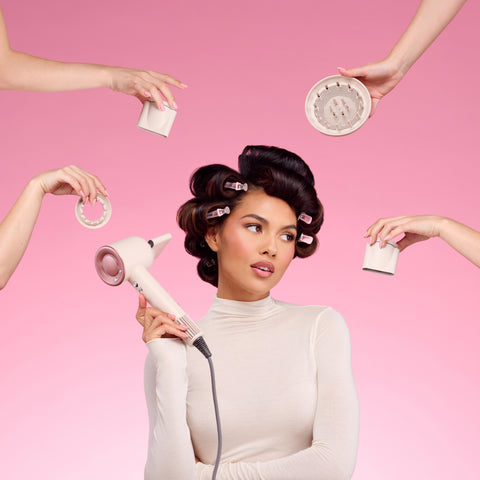
The rule of thumb: the wetter the hair, the greater this risk at a high temperature. Make sure hair is at least towel-dried (most of the excess water removed) before using a straightener or curling iron. An airstyler specifically designed for damp-to-dry hair can be a bit more flexible with this, but soaking wet, dripping hair remains a risk with any styling tool.
Which temperature and technique limit heat damage the most?
Match the temperature to your hair type and use as few passes per section as possible. The table below gives a practical guideline; if in doubt, always start at the lower end of the range.
Besides the temperature itself, technique counts just as much: keep the tool moving instead of holding it still in one spot, and let the tool cool down between sessions if you style multiple times a week. All these small adjustments add up, heat damage is usually the result of repetition, not of styling too hot once.
What role does the material of your styling tool play?
The material determines how evenly heat is released, and that matters just as much as the set temperature. Bare metal often releases heat unevenly, with the risk of hotspots: points that get much hotter than the rest of the barrel. A fully ceramic coating holds heat more evenly, which lowers the risk of this kind of localized overheating.
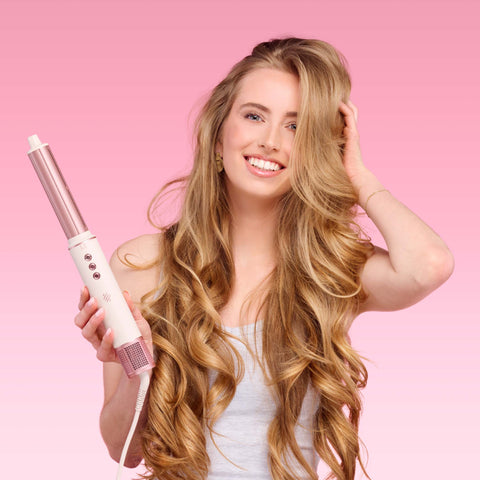
The Airstyler Pro Ceramiq uses a fully ceramic-coated barrel instead of a thin spray layer for this reason, combined with multiple temperature settings so you can adjust it to your hair type yourself. Because the coating is baked into the material rather than just sprayed on top, the even heat release stays intact even after extended use, which is part of why it comes with a 2-year warranty.
Frequently asked questions
Should I always use heat protection, even at a low temperature?
Yes. Even at lower temperatures, a heat protectant spray helps retain moisture and reduce friction while styling. The risk is smaller than at high temperatures, but cumulative damage from regularly styling without protection still builds up.
How dry does my hair need to be before I can style it with heat?
At least towel-dry, so most of the excess water is out. Soaking wet hair contains too much water, which can boil in the hair shaft at high temperatures, leading to permanent damage (bubble hair). The drier the hair beforehand, the smaller this risk.
Can heat-damaged hair repair itself?
No, genuine heat damage (such as bubble hair or severely burnt ends) isn't reversible. Products and treatments can temporarily improve the appearance, but the protein structure itself doesn't repair itself. Trimming it off and letting it grow back is the only real solution.
How many times can I go over the same section with a straightener or airstyler?
Preferably no more than once or twice. Every extra pass adds heat and friction without noticeably improving the result, so the risk of damage increases while the effect barely grows.
Looking for a styling tool that actively limits heat damage?
The Airstyler Pro Ceramiq uses a fully ceramic-coated barrel for more even heat release and works on every hair type, from 1A to 4C. In a customer survey of 214 users after 30 days of use, 87% experienced less hair damage right away, 96% said their curl lasted at least 24 hours, and 97% would recommend Ace & Taylor.
2-year warranty
30-day home trial
Free shipping
Trustpilot 4.7/5
Shop the Airstyler Pro Ceramiq
Figures based on Ace & Taylor's own customer survey of 214 users, not an independent clinical study.
A&T
Written by the Ace & Taylor Team, based on the science behind heat damage to hair and everyday customer questions about styling safely with our own tools.


